Role-based learning
A path for every role in your medspa
From a first day at the front desk to becoming the person the rest of the team learns from.
Choose a role
Four pathways. One standard
Front desk, aesthetician, HCP provider and manager — most platforms cover only the revenue-facing roles. Each pathway carries its own courses, five skill badges, and a place on the same recognition path.
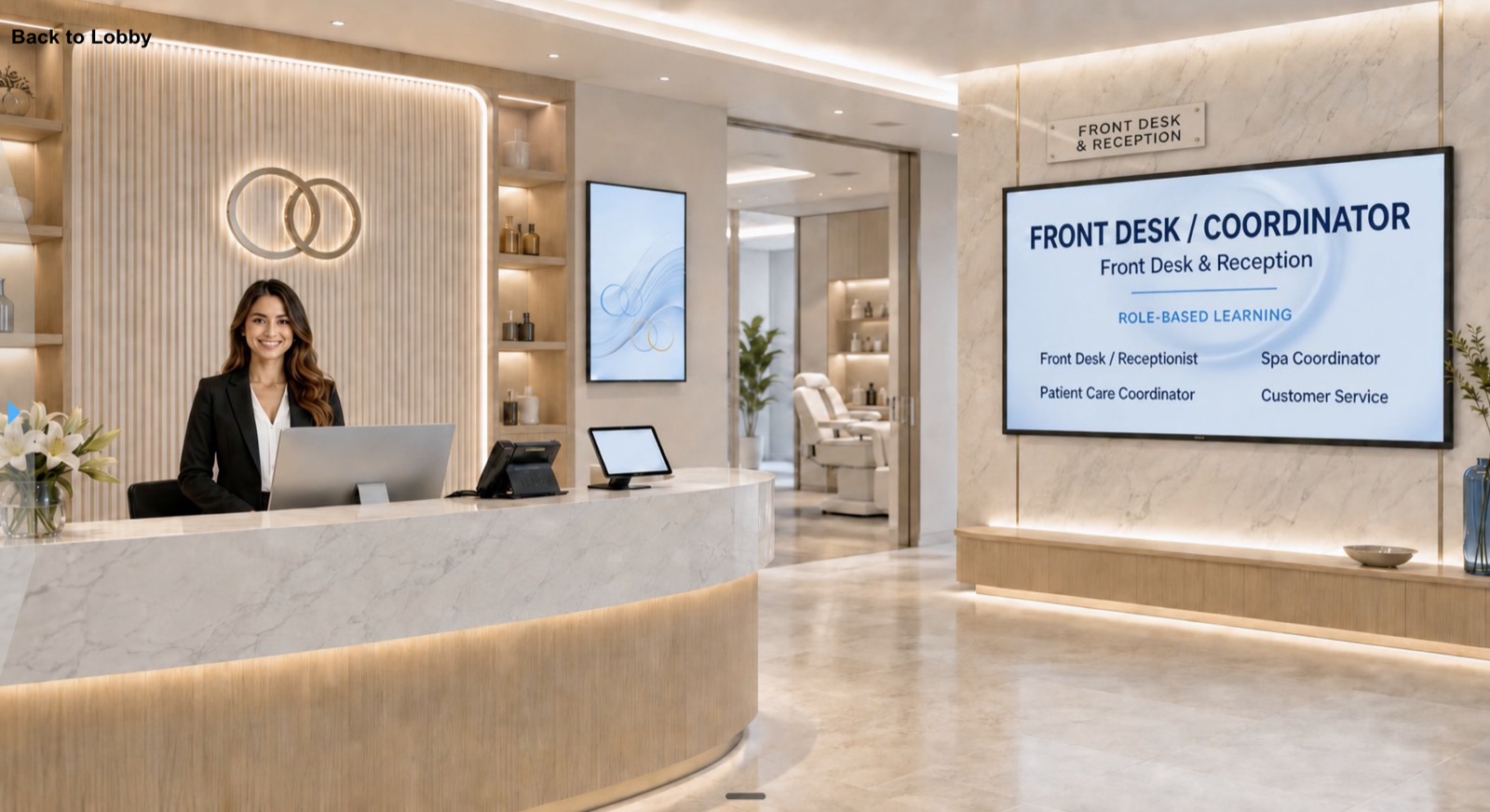
Front desk, reception, patient care coordination and customer service.
What this role studies
- Front desk foundations & communication essentials
- Appointment and schedule management
- POS essentials and the practice SOP pack
- Check-in, checkout and client handoffs
- Client recovery, rebooking and follow-up
- Treatment phone conversations — injectables, fillers, facials
Skill badges
- First contact ready
- Booking ready
- Checkout & records ready
- Handoff ready
- Follow-up ready
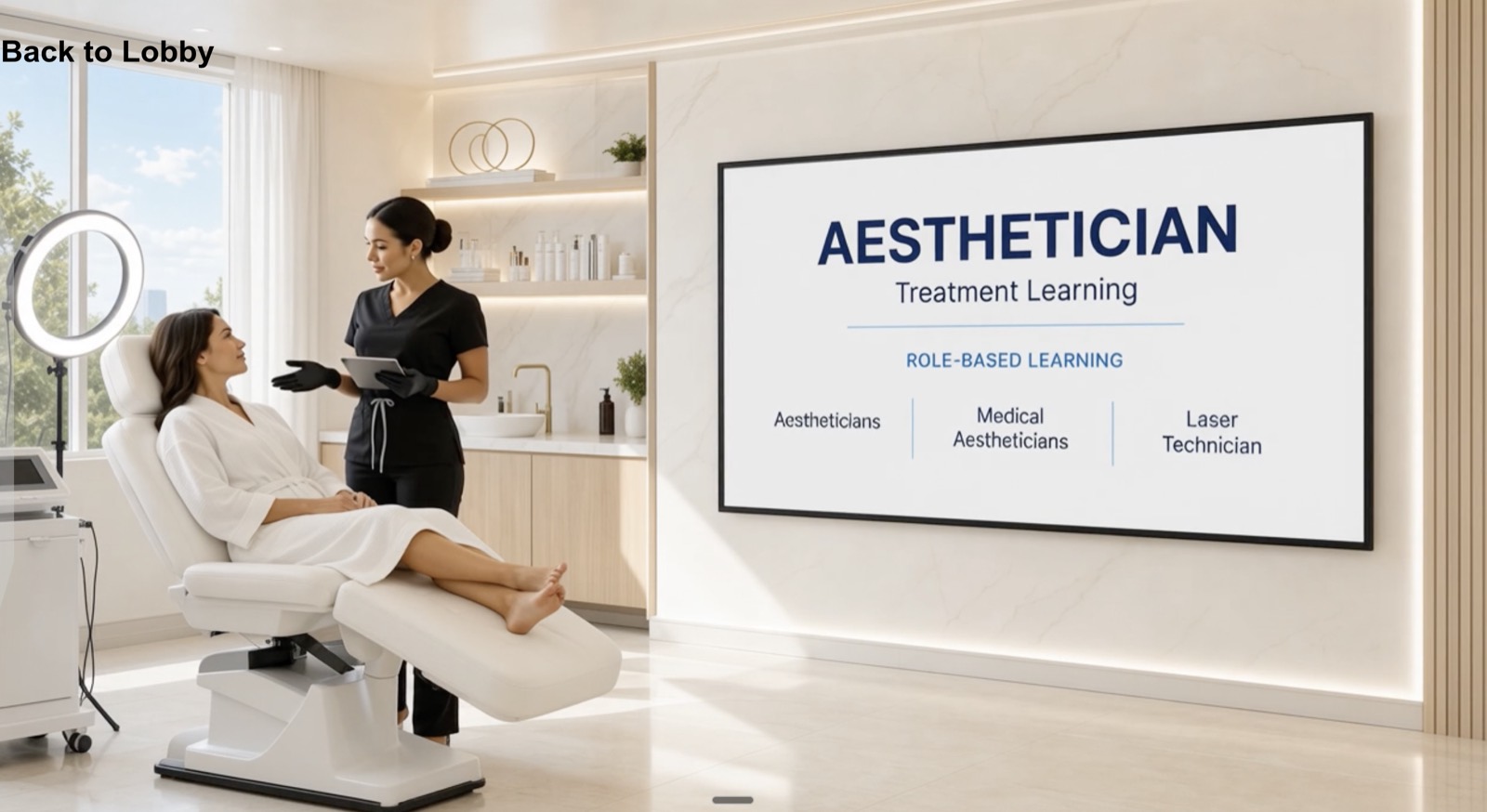
Aestheticians, medical aestheticians and laser technicians.
What this role studies
- The aesthetic consultation
- Skin assessment and Fitzpatrick skin typing
- Suitability, red flags and escalation
- Treatment planning and client expectations
- Documentation, home care, retail and rebooking
- Treatment consultations — facials, HydraFacial, injectables
Skill badges
- Consultation ready
- Skin assessment ready
- Escalation ready
- Plan & expectations ready
- Home care & continuity ready
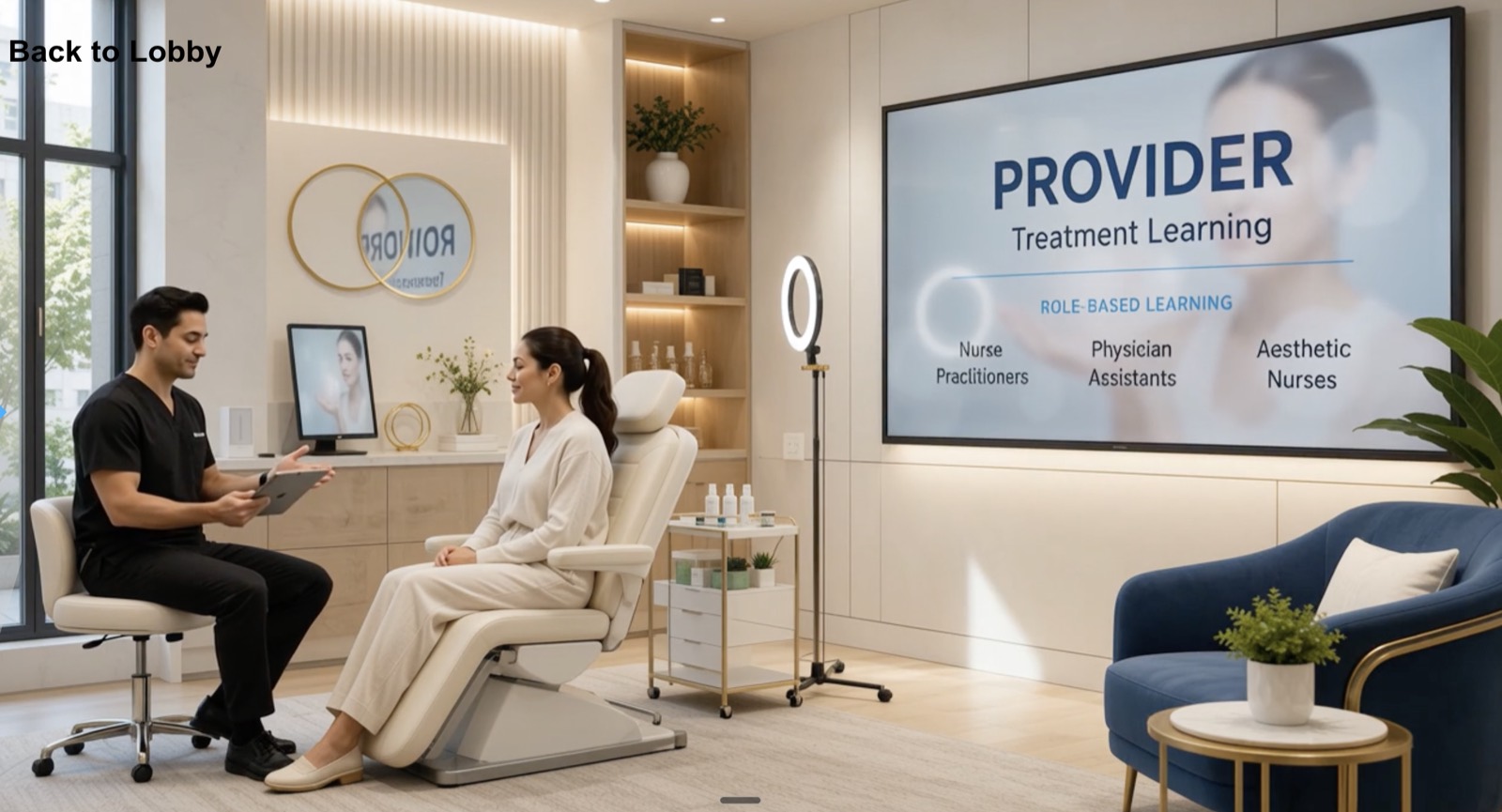
Injectors and clinical HCP providers. Clinical authorization stays with the practice.
What this role studies
- Role, scope and professional responsibility
- Structured client assessment and medical history
- Treatment suitability and decision-making
- Informed consent and expectation setting
- Clinical documentation, EMR and photography principles
- Recognizing concerns and escalating safely
- High-impact treatment consultations
Skill badges
- Safety & scope ready
- Assessment & planning ready
- Consent conversation ready
- Documentation & handoff ready
- Aftercare & follow-up ready
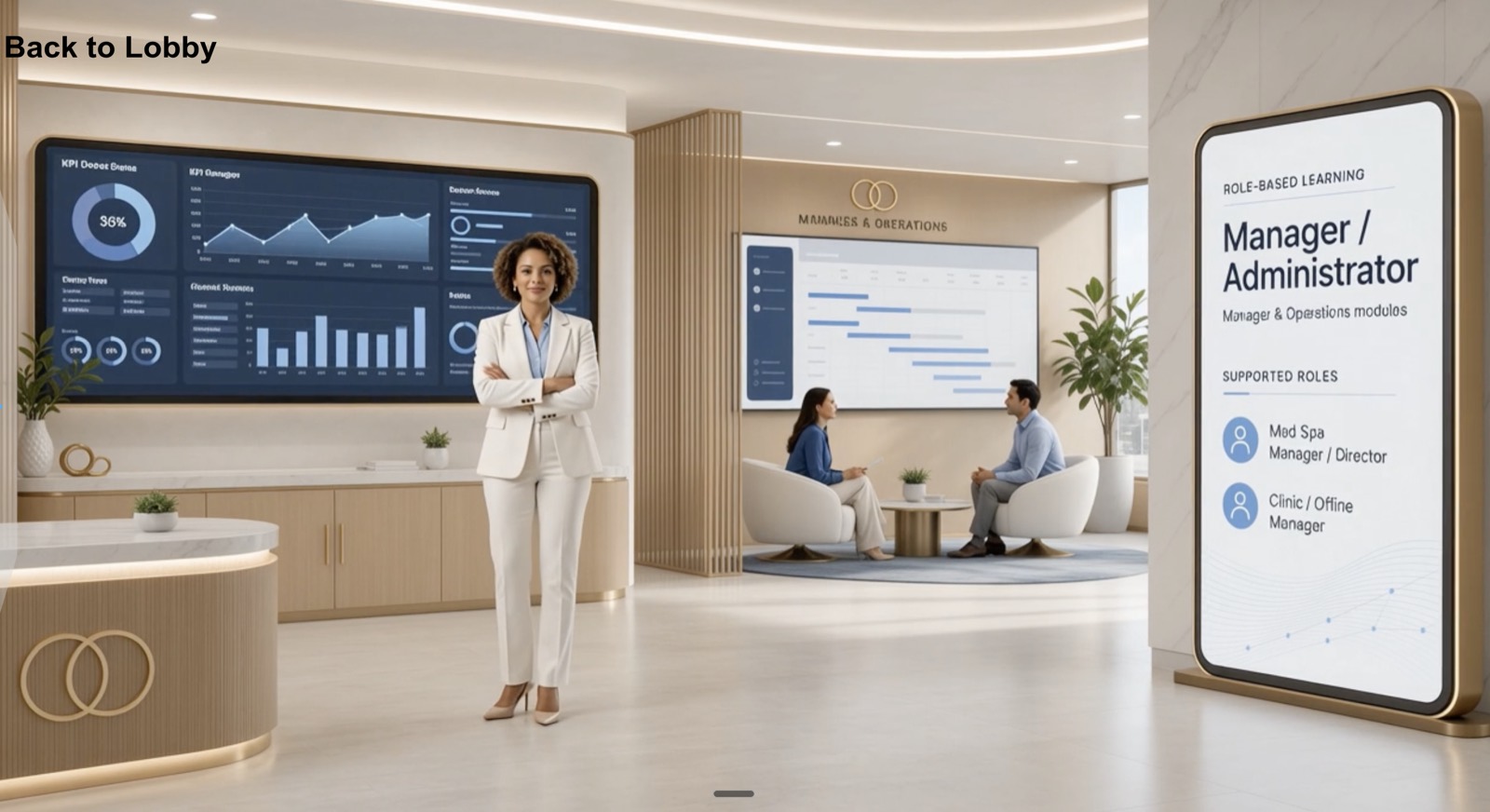
Med spa managers, directors and clinic / office managers.
What this role studies
- Managing a medspa and daily operations
- KPI tracking and retail performance
- Scheduling, labor and utilization
- Discounts, refunds and cash controls
- Performance management and accountability
- Recruiting, interviewing and onboarding
- Coaching conversations and feedback
Skill badges
- Team coaching ready
- KPI decisions ready
- Daily operations ready
- Service recovery ready
- Onboarding support ready
Progression
One recognition path. Role Ready is the first milestone, not the finish line
Points and skill badges are earned through onboarding and keep counting afterward, toward the higher professional credentials.
- 01PointsVerified progress across learning, practice, assessment and evidence.
- 02Skill BadgesProof of a specific capability — five per role, plus a Compliance badge.
- 03Role ReadyFirst milestoneCleared to work the core role under approved rules. The first milestone, not the finish line.
- 04Certified ProfessionalThe first formal credential, to one shared standard.
- 05Performance ProfessionalContinued, proven performance in the role over time.
- 06Master ProfessionalAdvanced mastery, steady performance, mentoring others.
One program, three schedules
You choose the pace. The standard doesn't move
Same assigned courses, the same five AI Coach practices, the same assessments at 80%, and the same Role Ready evidence gate — in all three. Only the release calendar, daily load and spacing change.
Extended pace · ≈ 25 min/day
- Days 1–3
Enter
Welcome, role and client context
- Days 4–7
Safety
OSHA and compliance before related duties
- Days 8–18
Build
Patient Journey and role foundations
- Days 19–25
Apply
Treatment, POS/SOP, five practices, evidence
- Days 26–30
Prove
Knowledge check, integrated challenge, validation
Front-desk example. The business owner picks the schedule; the AI Tutor personalizes focus and support inside it, never the timeline.
New hires take months to reach full productivity, and every location does it differently
Months of underperformance per hire, repeated with every hire, at every site.
A 7, 14 or 30-day onboarding program mapped day by day for each of the four roles.
Proof
The same structure, every role
Enter · Safety · Build · Apply · Prove — then the same Role Ready evidence gate. Shared on top of the role courses: nine compliance courses, OSHA, and the Patient Journey.
| Role | Role learning | AI Coach practices | Est. time | Ends at |
|---|---|---|---|---|
| Front Desk | 6 role courses + SOP pack | 5 | ≈ 12h | Role Ready |
| Aesthetician | 6 role courses + SOP pack | 5 | ≈ 13h 30m | Role Ready |
| HCP Provider | 9 role courses + SOP pack | 5 | ≈ 16h | Role Ready |
| Manager | 11 role courses + SOP pack | 5 | ≈ 16h | Role Ready |
Estimated learner time is the same in the 7, 14 and 30-day schedules — only the daily load changes.
Staff can't sell or explain what they don't properly understand
Every inquiry they can't confidently answer is a consultation that doesn't get booked.
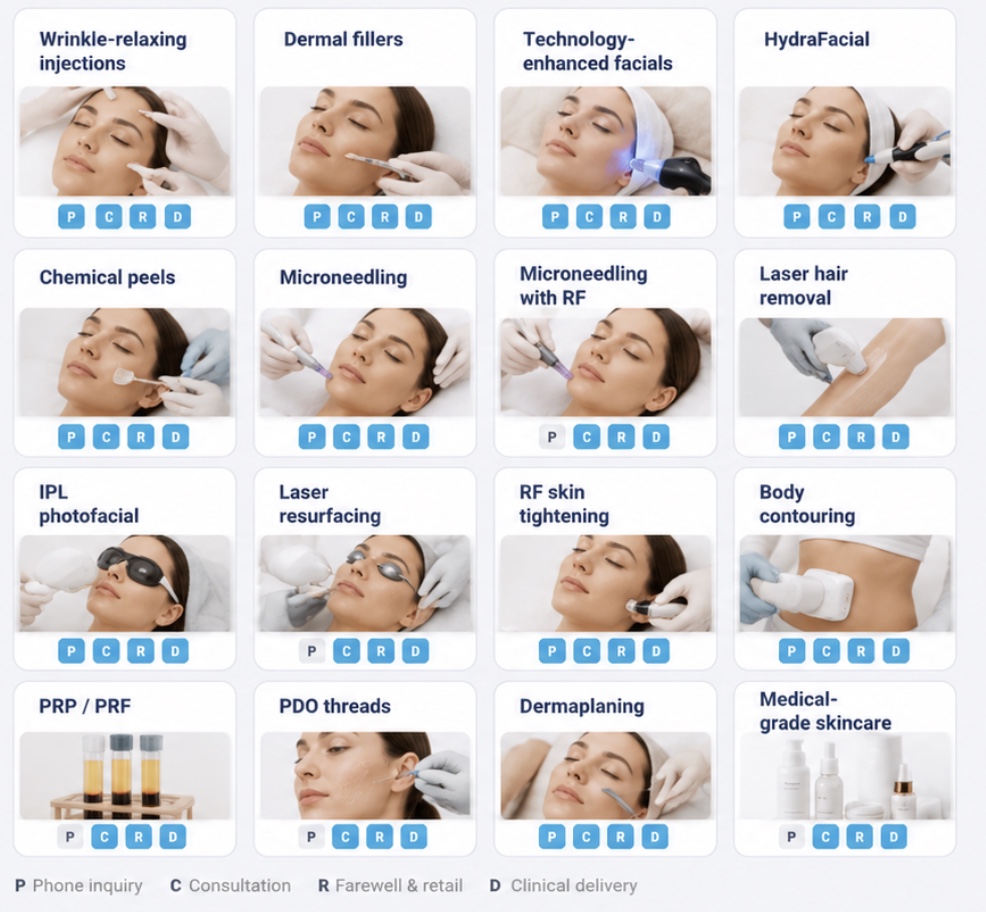
17 treatment lines covering phone inquiry, consultation, farewell & retail, and clinical delivery.
Proof
Clinical authority
Built with people who do this for a living
Clinical training courses developed with Aesthetic Nexus, and anatomy and injectable cadaver training from Dr. Sykes, sit alongside the platform's own role-based pathways.
Recognition people actually want
A skill badge for each proven capability, a credential at each stage of the recognition path, and a place on the leaderboard.
See the leaderboard →Professional credentials
- Role ReadyEarned
- Certified ProfessionalEarned
- Performance ProfessionalLocked
- Master ProfessionalLocked
Skill badges (front desk)
- First contact
- Booking
- Checkout & records
- Handoff
- Follow-up
- Compliance
Badge artwork — concept. Names, criteria and final designs are in review.
The patient journey
How to deliver a 5-star customer experience
A patient forms an impression at every step — the first phone call, the welcome at the desk, the consultation, the treatment room, the message that comes afterward. When everyone on the team understands the whole journey, not just their part, those steps connect into one seamless experience. That is what brings patients back, and what they describe to a friend.
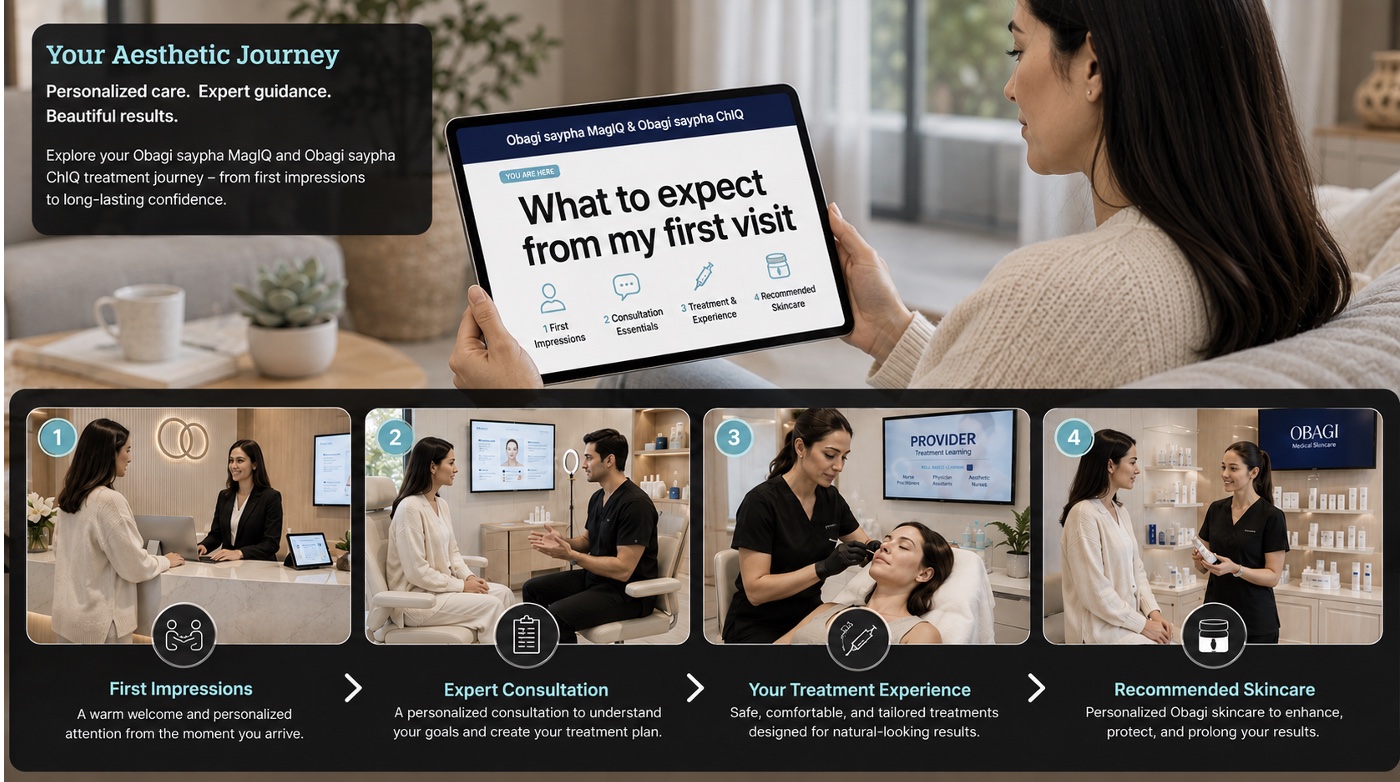
- One journey, shared by four roles. Front desk, aesthetician, HCP provider and manager each own a stretch of the patient journey — and the handoffs between them are where the experience is won or lost.
- Context travels with the patient. When goals, notes and the treatment plan move cleanly from one role to the next, the patient never has to repeat themselves or wonder whether the team is aligned.
- Consistency is the brand. A patient can't see your protocols, but they feel whether the second visit matches the first. A team trained the same way delivers the same experience every time.
- Retention beats acquisition. New guest visits are getting harder to win industry-wide; the patients you keep — and the ones they refer — are where growth comes from. A five-star journey is the mechanism.
- Word of mouth is built at the edges. People rarely rave about the treatment alone. They talk about how they were made to feel at reception, in the chair, and in the follow-up.
- Every pathway trains on the full journey. The Patient Journey course sits in all four role tracks, so the front desk understands the clinical stakes and the HCP provider understands the booking that got the patient there.